
- ABOUT US
-
PRODUCTS
Biomass Boiler
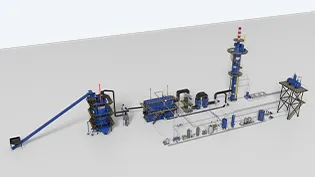
Biomass Gasification Steam Boiler
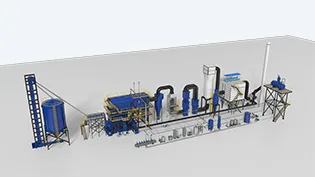
Biomass-fired Chain Grate Steam Boiler
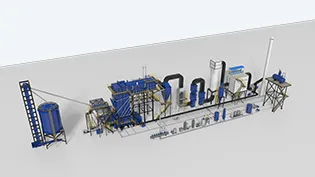
Biomass-fired Reciprocating Grate Steam Boiler
Thermal Oil Heater
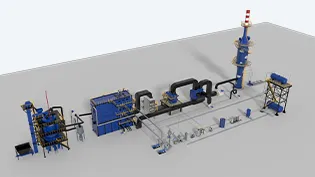
Biomass Gasification Thermal Oil Heater
Biomass-fired Chain Grate Thermal Oil Heater
Biomass-fired Reciprocating Grate Thermal Oil Heater
- INDUSTRIES
- OUR SOLUTIONS
- 360° TOUR
- MEDIA CENTER
- CONTACT
- POWERMAX-GROUP
language


 Back
BackBiomass Steam Boiler vs Hot Water Boiler: Which is Right for Your Industrial Plant?
For many industrial plants, choosing an industrial boiler is not just a technical comparison. The real question is whether the system can provide stable heat for daily production. Steam boilers are commonly used in processes that require high-temperature steam, such as drying, sterilization, cooking, and textile processing. Hot water boilers are more often used for space heating, washing, and low-temperature circulation.
Choosing the wrong industrial boiler can increase fuel costs, reduce heating stability, and create maintenance problems after installation. This article compares steam boiler vs hot water boiler from an industrial point of view, including working principle, efficiency, operating cost, maintenance, and typical applications. It also explains the benefits and applications of a biomass steam boiler for plants.
Steam Boiler vs Hot Water Boiler: Key Differences
The key difference between a steam boiler and hot water boiler is how they transfer heat. A steam boiler heats water until it becomes steam, then uses pressurized steam to deliver high-temperature heat for industrial processes. A hot water boiler heats water without turning it into steam, then circulates the hot water through pipes for heating or low-temperature applications. For most industrial plants, steam boilers are used for process heating, drying, sterilization, and manufacturing, while hot water boilers are mainly used for space heating, washing, and low-temperature heat circulation.
| Comparison Item | Steam Boiler | Hot Water Boiler |
|---|---|---|
| Heat Transfer Method | Uses steam and latent heat to transfer high energy | Uses heated water and sensible heat for circulation |
| Operating Temperature | Suitable for higher-temperature industrial processes | Usually used for lower-temperature heating needs |
| Operating Pressure | Works under higher pressure | Usually operates at lower pressure |
| Main Applications | Drying, sterilization, cooking, textile processing, paper production, chemical processing | Space heating, hot water supply, washing, and low-temperature circulation |
| Heating Response | Delivers heat quickly and efficiently in many process applications | Provides steady heat for continuous circulation |
| System Complexity | Requires steam piping, condensate return, water treatment, and pressure control | Simpler system structure and easier operation in many heating applications |
| Maintenance Needs | Higher maintenance requirements due to pressure, steam quality, and condensate management | Generally easier to maintain for standard heating use |
| Best Fit | Industrial plants that need stable steam generation for production | Buildings or facilities that mainly need heating or hot water circulation |
How Steam and Hot Water Boiler Systems Work in Industrial Plants
How a Steam Boiler Works
A steam boiler works by heating water until it changes into steam. The steam is then carried through pipelines to equipment that needs high-temperature heat, such as dryers, sterilizers, cookers, or textile processing machines. When steam condenses back into water, it releases a large amount of heat in a short time.
How a Biomass Steam Boiler Works
The heat source of a steam boiler can come from different fuels. Some plants use natural gas, coal, or oil, while others choose biomass fuels such as wood chips, rice husk, palm waste, or other residues. In this case, the system is often called a biomass steam boiler. For plants with stable biomass resources, this can make steam production more cost-effective and reduce dependence on fossil fuels.
How a Hot Water Boiler Works
A hot water boiler works differently. It heats water to a required temperature but does not turn it into steam. The hot water is circulated through pumps, pipes, and heat exchangers to provide steady heat for space heating, washing, and low-temperature processes. Because it does not involve steam generation, a hot water boiler usually operates at lower pressure and is easier to manage in general heating applications.
Efficiency Comparison: Steam vs Hot Water Boiler Systems
The efficiency of a steam boiler vs hot water boiler depends on how the heat is used in the plant. For low-temperature heating, a hot water boiler can be efficient because it circulates heated water at lower pressure and usually has less distribution loss. For industrial process heating, a steam boiler often provides stronger practical efficiency because steam transfers a large amount of heat quickly when it condenses. In real operation, overall efficiency also depends on pipe insulation, heat recovery, system load, water treatment, and whether the boiler matches the actual process demand.
| Efficiency Factor | Steam Boiler | Hot Water Boiler |
|---|---|---|
| Heat Transfer Efficiency | High when steam is used directly for process heating | High when hot water is used for low-temperature heating |
| Heat Delivery Speed | Transfers heat quickly through steam condensation | Transfers heat steadily through water circulation |
| Temperature Efficiency | More efficient for high-temperature process needs | More efficient for lower-temperature heating needs |
| Distribution Loss | Can be higher if steam pipes, traps, or condensate return are poorly managed | Usually lower in simple closed-loop heating systems |
| Overall System Efficiency | Depends on steam quality, condensate recovery, insulation, and heat recovery | Depends on circulation design, pump efficiency, insulation, and heat exchanger performance |
Cost and Maintenance: Steam Boiler vs Hot Water Boiler
The cost difference between a steam boiler vs hot water boiler comes from equipment price, installation, piping, fuel consumption, water treatment, inspection, spare parts, and daily maintenance. A steam boiler usually requires a more complete system, including steam piping, condensate return, steam traps, safety valves, and regular water treatment. As a result, the initial investment and maintenance cost of a steam boiler are usually higher than those of a hot water boiler.
| Cost and Maintenance Factor | Steam Boiler | Hot Water Boiler |
|---|---|---|
| Initial Equipment Cost | Usually higher because the system must handle steam pressure | Usually lower for standard heating applications |
| Installation Cost | Higher due to steam piping, pressure control, condensate return, and safety components | Lower in many cases because the system structure is simpler |
| Operating Cost | Depends on fuel type, steam demand, condensate recovery, and heat loss control | Usually lower for low-temperature heating and circulation |
| Water Treatment Cost | More important because steam quality and boiler water condition affect safety and efficiency | Still needed, but usually less complex than steam systems |
| Maintenance Work | Requires regular checks on pressure parts, steam traps, valves, water level, and condensate return | Mainly involves pumps, pipes, heat exchangers, scaling, and circulation performance |
| Long-Term Value | Better when the plant needs stable steam for production processes | Better when the plant only needs hot water or low-temperature heating |
When a Biomass Steam Boiler Makes Sense for Industrial Process Heating
If your plant needs stable steam for daily production, a steam boiler is usually more suitable than a hot water boiler. Steam is widely used in industrial processes that require high-temperature heating, fast heat transfer, or direct steam contact, such as food processing, textile dyeing, wood drying, chemical processing, and other manufacturing applications. When these processes run for long hours, fuel cost and steam stability become important factors. For plants that can access wood chips, rice husks, or other biomass fuels, a biomass steam boiler can be an ideal choice for industrial process heating.
UPAThermal Biomass Steam Boiler Solutions
UPAThermal focuses on biomass boiler solutions for industrial plants that need stable process steam and flexible fuel options. Its systems are designed to use a wide range of biomass fuels, including wood chips, rice husks, palm fiber, bagasse, and other biomass materials. This allows factories to make use of local fuel resources while reducing dependence on fossil fuels and improving long-term energy stability.
With years of experience, UPAThermal combines high-efficiency design, advanced combustion technology, and customized system integration to match different industrial conditions. Its solutions are built to deliver stable steam output, high thermal efficiency, and low emissions, while adapting to varying fuel quality and production demand.
Steam Boiler vs Hot Water Boiler: Which Is Right for Your Plant?
The choice between a steam boiler vs hot water boiler depends on how heat is used in your plant. If your process requires high-temperature steam for drying, sterilization, cooking, or process heating, a steam boiler is usually the right option. If the demand is mainly for space heating, washing, or low-temperature circulation, a hot water boiler can be a simpler and more cost-effective solution.
If your plant requires a reliable steam supply and is considering a shift in fuel strategy, UPAThermal can support this transition with tailored biomass steam boiler solutions. Based on your fuel type, steam demand, and production process, each system is designed and implemented to help improve production efficiency, reduce operating costs, and support environmental goals.

Tailored Solutions, Timeless Service——
We Keep Your Operations Running
Contact US
Product Information
Quantity
Unit
Piece
Support order samples, customization, wholesale direct, and complete payment. If the product you look for does not have corresponding customized content, pls fill out the form below to contact us, and we will reply ASAP.